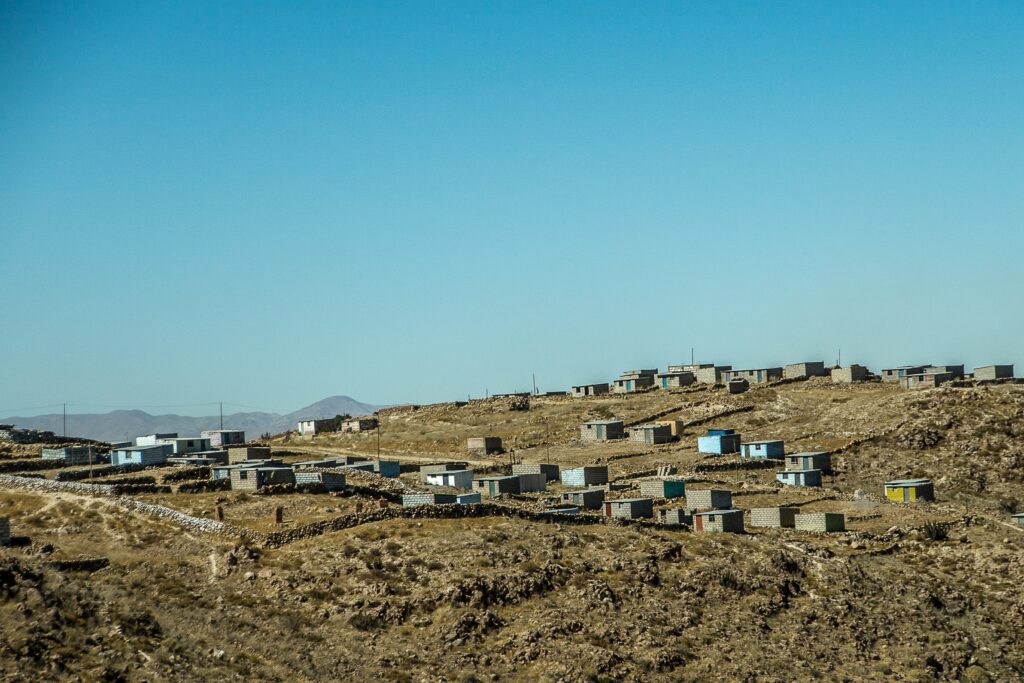
A remote mining village is not just a place where your workforce sleeps. It is an operational system, and when it fails, it costs you. Turnover spikes. Incident rates climb. Regulatory notices land on your desk. Production slows.
Western Australia’s resource sector runs some of the most complex remote accommodation operations on the planet, from Pilbara iron ore camps housing thousands of FIFO workers to smaller Goldfields and Midwest exploration villages operating on tight budgets and even tighter rosters. The environments are unforgiving. The regulatory obligations are non-negotiable. And the expectations of your workforce have risen sharply.
This guide covers everything a project manager, commercial manager, or operations lead needs to know about mining camp management in WA: what it covers, what legislation governs it, where management arrangements typically fail, how to evaluate a provider, and what a well-run village actually looks like on the ground.
| WHO THIS IS FOR
Mining company project leads, commercial managers, and site superintendents in Western Australia who are evaluating integrated camp management providers, transitioning between contractors, or reviewing the performance of an existing arrangement. |
In This Article
- 1. What Is Mining Camp Management?
- 2. WA Regulatory Framework You Must Know
- 3. What a Full Camp Management Contract Actually Covers
- 4. Single-Vendor vs. Multi-Contractor: A Direct Comparison
- 5. Workforce Wellbeing: The Performance Variable Most Operators Underinvest In
- 6. WA Mining Regions: Operational Considerations by Area
- 7. How to Evaluate a Camp Management Provider: A Checklist
- 8. Frequently Asked Questions
1. What Is Mining Camp Management?

Mining camp management (also called village management or life support services) is the integrated operation of all non-core services at a remote accommodation facility. It encompasses every function that keeps your workforce fed, sheltered, healthy, and operationally ready so your core team can focus on production.
At a minimum, this includes:
- Accommodation management — room allocation, housekeeping, linen, maintenance
- Catering — menu planning, bulk cooking, dietary compliance, HACCP food safety
- Water treatment and supply
- Wastewater management and disposal
- Waste management and environmental compliance
- Utilities — power, HVAC, generator maintenance
- Grounds and common area maintenance
- Safety and compliance — WHS obligations, emergency response, incident reporting
- Roster management and staffing of all camp functions
At a well-run camp, it also includes structured workforce well-being programs, real-time IoT monitoring of assets and utilities, and a governance framework with measurable KPIs reported directly to the project team.
| ~100,000
FIFO workers are employed across WA at peak resource activity |
$45B+
WA mining industry revenue annually (DMIRS) |
72%
Of FIFO workers, report mental health as a significant workplace challenge (WA Health) |
Triple ISO
What leading camp management providers are certified to |
2. WA Regulatory Framework You Must Know
Mining operations in Western Australia operate under one of the most comprehensive safety and environmental legislative regimes in the world. Non-compliance is not a commercial inconvenience; it is a prosecutable offence under the Work Health and Safety Act 2020 (WA).
| Legislation / Standard | What It Governs | Who Is Responsible |
|---|---|---|
| Work Health and Safety Act 2020 (WA) | Primary duty of care, incident reporting, PCBUs | Mine operator + camp management provider |
| WHS (Mines) Regulations 2022 | Mine-specific obligations — PHMPs, emergency response, fitness-for-work | Mine operator (delegated to camp manager) |
| Environmental Protection Act 1986 | Waste, water discharge, and pollution at remote sites | Mine operator + camp management provider |
| HACCP / Food Standards Australia | Food safety at high-volume remote catering operations | Catering/camp management provider |
| ISO 45001:2018 | OHS management systems — the international benchmark | Camp management provider |
| ISO 9001:2015 | Quality management systems, process documentation, and audits | Camp management provider |
| ISO 14001:2015 | Environmental management at operational sites | Camp management provider |
| KEY COMPLIANCE POINT
Under the WHS Act 2020 (WA), principal contractors share liability for the health and safety of workers on site, including those employed by a camp management provider. Your provider’s compliance gaps become your legal exposure. Always confirm your camp manager’s statutory qualifications with the Department of Mines, Industry Regulation and Safety (DMIRS): dmirs.wa.gov.au |
3. What a Full Camp Management Contract Actually Covers

Not all camp management contracts are created equal. The table below outlines every service function a comprehensive integrated contract should include and what a typical stripped-down or fragmented arrangement leaves out.
| Service Function | Integrated IFM Provider | Fragmented Multi-Contractor |
|---|---|---|
| Accommodation management & housekeeping | ✓ Single scope | ✗ Separate contract |
| Catering — bulk prep, dietary compliance, HACCP | ✓ Single scope | ✗ Separate contract |
| Preventive building & asset maintenance | ✓ Single scope | ✗ Separate contract |
| Water treatment & wastewater management | ✓ Single scope | ✗ Often excluded |
| Waste management & environmental compliance | ✓ Single scope | ✗ Often excluded |
| Grounds & common area maintenance | ✓ Single scope | ✗ Separate contract |
| OHS compliance, incident reporting, PHMPs | ✓ Embedded in all functions | ✗ Each contractor’s own system |
| KPI reporting to the project team | ✓ Monthly + live dashboard | ✗ Rarely consolidated |
| Workforce well-being programs | ✓ Structured offering | ✗ Not included |
| Single point of accountability | ✓ One contact, one contract | ✗ Multiple PMs required |
| Camp mobilisation / demobilisation | ✓ Proven playbook | ✗ Coordination risk between parties |
The accountability gap in fragmented arrangements is where costs are hidden and performance slips. When the caterer blames maintenance and maintenance blames housekeeping, no one fixes the problem, and your project manager spends their day refereeing contractor disputes instead of managing production.
Sub-Services Under a Full Mining Camp Management Contract
Cameron Facilities’ integrated mining camp management covers all of the following as a unified scope:
- FIFO camp management — roster design, swing accommodation, and workforce transitions
- Mining camp maintenance — planned preventive and reactive trades coordination
- Water and wastewater management — treatment, testing, and discharge compliance
- Camp safety compliance — WHS Act 2020, PHMPs, emergency response planning
- Site waste management — segregation, disposal, and environmental reporting
- Camp mobilisation and demobilisation — rapid start-up and orderly wind-down
- Mining camp catering — high-volume, nutritional meal service with HACCP compliance
4. Single-Vendor vs. Multi-Contractor: A Direct Comparison

This is the most consequential structural decision you will make when setting up or re-tendering remote accommodation services. Here is what the data and operational experience in WA consistently show:
| Decision Factor | Integrated Single Vendor | Multi-Contractor Arrangement |
|---|---|---|
| Accountability | One provider owns all outcomes | Blame-shifting between contractors is common |
| Safety governance | One integrated WHS system across all functions | Fragmented gaps at the interfaces between contractors |
| Project management overhead | Low one relationship, one contract, one invoice | High multiple PMs, contracts, and invoices |
| Cost visibility | Transparent outcome-based SLAs | Costs are distributed across multiple scopes, making it harder to audit |
| Performance reporting | Consolidated monthly reports + live dashboards | Rarely consolidated; comparing across contractors is manual |
| Mobilisation speed | Single mobilisation playbook, one team to deploy | Coordination between multiple parties adds risk and time |
| Workforce continuity | Shared team culture, lower turnover in support staff | Competing employer cultures on the same site |
| THE CAMERON FACILITIES MODEL
We operate as a single integrated provider across every camp function, which means our client’s project manager has one call to make, one report to read, and one accountable partner when something needs fixing. Visit cameronfacilities.com.au/case-studies to see the outcomes this delivers. |
5. Workforce Wellbeing: The Performance Variable Most Operators Underinvest In
The WA Health FIFO Health Study found that FIFO workers experience significantly elevated rates of psychological distress, relationship strain, and social isolation compared to the general workforce. This is not a welfare issue in isolation, it is a productivity and retention issue with direct financial consequences.
High turnover in FIFO environments costs operators in recruitment, induction, and lost productivity. When workers are disengaged, injury rates increase and absenteeism spikes. The quality of the camp environment, food, cleanliness, amenities, and social opportunities is the single largest variable within your control outside of pay and roster design.
| ↓ Turnover
Engaged workforces with strong camp amenities retain more employees, swing over swing |
↓ Incidents
Fatigue and psychological distress are leading precursors to workplace incidents at remote sites |
↑ Productivity
Rested, well-fed, socially connected workers produce more in less time |
What a Structured Well-Being Program Delivers
Cameron Facilities embeds a structured wellness and mental health program within every camp management contract. Delivered in partnership with Ging Mo Academy (gingmo.com.au), the program includes the following:
- Kung Fu and Tai Chi sessions led by Master Si Fu Gawain Siu, customised to your site environment after a personal site visit
- Reformer Pilates classes and guided Stretch Lab sessions
- Acupuncture and traditional Chinese medicine delivered by AHPRA-registered practitioners
- Aboriginal mental health first aid and culturally safe trauma-informed care through Barrowa Consultancy
- Online program modules accessible during flights and off-swing weeks
| INDIGENOUS ENGAGEMENT
Our partnership with Barrowa Consultancy, led by Indigenous engagement expert Rayleen Councillor, ensures culturally safe and trauma-informed well-being support for Aboriginal and Torres Strait Islander workers on site, aligned with our commitment to reconciliation across our national operations. |
6. WA Mining Regions: Operational Considerations by Area
Western Australia’s resource sector spans some of the most extreme and geographically diverse terrain on earth. Camp management requirements vary significantly by region.
| Region | Primary Commodities | Key Operational Challenges | Camp Management Priority |
|---|---|---|---|
| Pilbara | Iron ore, lithium, and natural gas | Extreme heat (up to 50°C), cyclone risk, large FIFO populations | HVAC reliability, water security, and emergency response |
| Goldfields–Esperance | Gold, nickel, copper | Dust, variable access roads, remoteness from the Kalgoorlie hub | Food logistics, dust management, communications |
| Midwest | Critical minerals: lithium, rare earths, manganese | Rapid project ramp-ups, new operators, and limited local labour | Fast mobilisation, scalable staffing, greenfield capability |
| Kimberley | Diamonds, gold, potash | Wet season access restrictions, extreme isolation, and indigenous land considerations | Cultural engagement, logistics resilience, and environmental compliance |
| South West | Bauxite, coal, mineral sands | Community interface, proximity to metropolitan areas | Compliance consistency, workforce welfare standards |
Cameron Facilities mobilises nationally from our Perth base, with established supply chains, logistics networks, and subcontractor relationships across all WA mining regions. Our site-specific management plans are built for the conditions of your location — not a generic template adapted from elsewhere.
7. How to Evaluate a Camp Management Provider: A Checklist
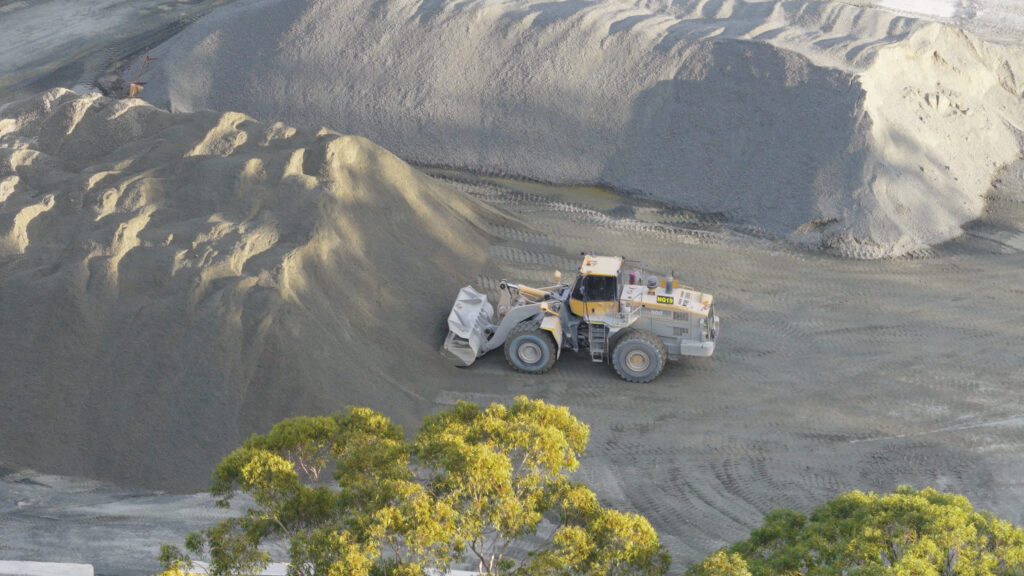
If you are currently tendering for camp management services in WA or reviewing an incumbent provider, here is the minimum standard you should hold any provider to before signing.
| ✓ | ISO 9001 (Quality), ISO 45001 (Safety), and ISO 14001 (Environment) certifications verified, current, and covering camp operations specifically |
| ✓ | Statutory qualifications confirmed with DMIRS camp managers must meet WHS (Mines) Regulations 2022 requirements |
| ✓ | A site-specific management plan, not a generic document; your site’s roster, SLAs, KPIs, and emergency response must be addressed |
| ✓ | HACCP-compliant catering operation — with documented food safety management and audit history |
| ✓ | Water and wastewater management capability, including treatment system oversight and discharge compliance reporting |
| ✓ | Demonstrated mobilisation experience references from comparable WA remote projects |
| ✓ | Single point of contact with decision-making authority, not a customer service number |
| ✓ | Real-time reporting capability, IoT asset monitoring, mobile work orders, and monthly performance dashboards |
| ✓ | Workforce wellbeing program structured, not ad hoc; deployable across the full contract term |
| ✓ | Indigenous engagement framework — especially relevant for Kimberley, Pilbara, and Goldfields operations |
| ✓ | Transition and demobilisation plan a provider who has only ever mobilised camps is not the same as one who has safely wound them down |
| ASK THIS IN EVERY TENDER
“Who is the most senior person on your team who will answer a call from my site superintendent at 2 am, and what authority do they have to make decisions?” The answer tells you everything about how the contract will actually be managed. |
8. Frequently Asked Questions
What is included in a mining camp management contract in WA?
A comprehensive contract should cover accommodation management and housekeeping, catering with HACCP compliance, preventive and reactive maintenance, water treatment and wastewater management, waste management and environmental compliance, grounds maintenance, OHS compliance with site-specific PHMPs, workforce well-being programs, and consolidated KPI reporting. Under the WHS Act 2020 (WA) and WHS (Mines) Regulations 2022, the camp management provider shares responsibility for OHS outcomes on site.
What legislation governs mining camp management in Western Australia?
The primary legislation is the Work Health and Safety Act 2020 (WA) and the WHS (Mines) Regulations 2022. Environmental compliance falls under the Environmental Protection Act 1986. Food safety must comply with HACCP and Food Standards Australia New Zealand. DMIRS oversees mine operator obligations and the statutory qualifications of camp managers.
How does FIFO camp management differ from standard camp management?
FIFO camp management has specific demands, principally the management of swing rosters, rapid turnover of personnel between crews, and heightened well-being requirements for workers living away from home. FIFO camps also require rigorous fitness-for-work protocols under WA mining regulations. Cameron Facilities’ FIFO camp management service is purpose-built for these demands, including structured well-being programs that address the isolation and psychological pressure specific to FIFO work patterns.
What does an ISO-certified camp management provider mean for my operation?
ISO 9001 (Quality), ISO 45001 (Safety), and ISO 14001 (Environmental) certifications mean the provider operates under an internationally audited management system—not ad hoc procedures. For your operation, this means documented SOPs for every function, structured audit trails, defined incident reporting and corrective action processes, and a single governance framework covering safety, quality, and environmental performance. Critically, it means your provider’s processes will survive staff changes.
Can Cameron Facilities manage a greenfield camp mobilisation?
Yes. Cameron Facilities has established mobilisation playbooks for greenfield camp start-ups, contractor transitions, and seasonal ramp-ups. We manage the full mobilization scope, staffing, supply chain, equipment, regulatory documentation, and site inductions under a single coordinated plan. Contact us at cameronfacilities.com.au/request-quote to discuss your project timeline.
Does Cameron Facilities operate outside the Perth metro area?
Yes. While our head office is at 396 Walcott St, Mount Lawley, Perth, we mobilise nationally. Our mining camp management operations span remote sites across the Pilbara, Goldfields–Esperance, Mid West, and Kimberley regions, as well as interstate.
| Ready to Talk About Your Camp?
Whether you’re setting up a new remote village, transitioning from an incumbent provider, or reviewing your current arrangement, our team is ready to have a direct, commercial conversation about what an integrated management model looks like for your site. Schedule a Meeting: cameronfacilities.com.au/contact-us Call: +61 8 6154 0910 |
Further Reading — Cameron Facilities
- Mining Camp Management Perth
- FIFO Camp Management
- Wellness & Mental Health Program
- OHS & Safety Compliance Services
- Catering Services Perth
- Case Studies
External References
- Work Health and Safety Act 2020 (WA) — legislation.wa.gov.au
- WHS (Mines) Regulations 2022 — legislation.wa.gov.au
- Environmental Protection Act 1986 — legislation.wa.gov.au
- Department of Mines, Industry Regulation and Safety (DMIRS) — dmirs.wa.gov.au
- FIFO Workers — WA Health — health.wa.gov.au
- ISO 45001:2018 Occupational Health and Safety Management Systems — iso.org
- ISO 9001:2015 Quality Management Systems — iso.org
- ISO 14001:2015 Environmental Management Systems — iso.org
- Introduction to HACCP — Food Standards Australia New Zealand — foodstandards.gov.au
- Ging Mo Academy — gingmo.com.au
Recent Posts
-
 Perth Building Management: What Wet Season Really Reveals
 -
 Concierge Services for Commercial Buildings: Is It Worth the Investment?
 -
 How to Choose a Mining Camp Management Company in WA (2026 Buyer’s Checklist)
 -
 Commercial Cleaning Services in Perth: How to Compare Quotes Properly
 -
 Concierge Services Perth: What Premium Buildings Should Expect (and Pay)